

Written by: David Rule, Conveyancing [Published 25/08/2026]
Learn how off-the-plan timelines, deposits and sunset clauses work, including Queensland laws that restrict some developer terminations.
Buying off the plan in Queensland means committing to a property before you receive a separate title. In many cases, you also sign before construction is complete. The process can involve long settlement timelines, finance risks and detailed contract conditions. Queensland law also treats proposed land and community title lots differently. This article explains the key stages, deposit options, sunset clauses and current buyer protections.
The Timeline and Deposit Options for Buying Off the Plan in Queensland
When you buy off the plan, you enter into a contract for a proposed lot before Titles Queensland creates its separate title. Depending on the development, settlement may be months or years away.
The process commonly includes:
- Signing the contract: You agree to the contract terms and provide the required deposit or approved security.
- Development and construction: Depending on the stage of the project, the developer may complete approvals, development works and construction.
- Registration: Titles Queensland registers the relevant survey plan or community titles scheme and creates a separate title for the property.
- Settlement: The timing then depends on the contract and the type of property. For a proposed community title lot, settlement cannot occur earlier than 14 days after the seller advises the buyer that the scheme has been established or changed. Different requirements apply to proposed land under the Land Sales Act 1984.
The contract will specify the required deposit. Under current Queensland law, a deposit for a proposed lot can be up to 20% of the purchase price without exceeding the statutory deposit threshold. The deposit holder must generally keep money paid before settlement in a prescribed trust account until a party becomes entitled to it.
Some contracts allow a deposit bond, bank guarantee or other approved security instead of a cash deposit. This can avoid tying up the full cash amount while you wait for settlement. However, you do not have an automatic right to use one. The contract and the seller must permit the proposed form of security.
What Is a Sunset Clause in Queensland?
Off-the-plan contracts often contain a sunset clause. This clause may allow a party to terminate if a specified event, such as plan registration, creation of a separate title or settlement, has not occurred by the sunset date. The exact rights depend on the contract and the legislation that applies to the property.
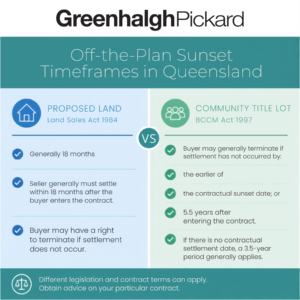
For proposed land covered by the Land Sales Act 1984, section 14 generally requires the seller to settle no later than 18 months after the buyer enters the contract. If the seller fails to do so, other than because of the buyer’s default, the buyer may terminate before settlement. This 18-month period is a statutory settlement requirement rather than simply a maximum sunset clause.
Different rules apply to proposed lots in community titles schemes. Under section 217B of the Body Corporate and Community Management Act 1997, a buyer may terminate if the seller has not settled by the earlier of the contractual sunset date or 5.5 years after the contract was entered into. If the contract contains no settlement date, a 3.5-year period generally applies.
Can a Developer Terminate an Off the Plan Contract?
The 2023 reforms to the Land Sales Act 1984 restrict a seller’s ability to use a sunset clause to terminate certain off-the-plan land contracts. Importantly, these protections do not currently apply to most community title lots, such as apartments, or to linked or single house-and-land contracts, or to small subdivisions where there are fewer than five new lots being created.
For a land contract covered by the reforms, a sunset clause cannot automatically terminate the agreement. The seller may generally terminate under the clause only if:
- the buyer gives written consent after receiving the required notice;
- the Supreme Court makes an order permitting termination; or
- the regulations allow another method.
If the seller seeks the buyer’s consent, they must give a written sunset clause notice at least 28 days before the sunset date. The notice must explain the proposed termination and the seller’s reasons. The buyer must respond within the required timeframe, but failing to respond does not amount to consent.
If the seller applies to the Supreme Court, they must satisfy the Court that termination is just and equitable. The Court must consider factors including the seller’s conduct, reasons for delay, prospects of settlement, the effect on both parties and any increase in the value of the land.
Material Variations and Risks When Buying Off the Plan in Queensland
Off-the-plan developments can change before settlement. The statutory protections focus on information contained in the disclosure documents rather than every representation in a marketing brochure.
If information in a required disclosure plan or statement becomes inaccurate, the seller may have to provide an updated statement. Under both the Land Sales Act 1984 and the Body Corporate and Community Management Act 1997, a buyer who would be materially prejudiced by certain inaccuracies may have a right to terminate. For the further-statement provisions, written notice generally needs to be given within 21 days after receiving the updated information, or within a longer period agreed by the parties.
The contract may provide additional rights relating to changes in fixtures, finishes or specifications, so the particular contract terms should also be reviewed.
Beyond unexpected floorplan changes, several other risks require preparation before paying a deposit.
- Building delays: Construction can stall for months or years, leaving your deposit tied up while you wait for completion.
- Expiring finance approvals: Finance approvals are usually time-limited and may expire well before an off-the-plan property is ready to settle. Your lender may need to reassess your finances, the property and its value closer to settlement.
- Valuation shortfalls: If the property market dips, your lender’s valuation at completion may come in lower than the purchase price, forcing you to fund the cash shortfall yourself.
- Developer insolvency: Insolvency involving the developer or builder can delay or jeopardise completion. Your rights will depend on the contract and the circumstances, although cash deposits paid under the applicable off-the-plan legislation are generally protected in trust until someone becomes legally entitled to them.
- Short timeframes: There is generally only a 14 day period between the notice of registration of the survey plan and settlement, which practically means there is a very short turnaround time for settlement, especially if you are obtaining finance to complete the purchase. You should ensure your lender can be ready to settle with such short notice.
Off-the-plan contracts often contain detailed developer-drafted conditions dealing with extensions, variations, settlement and access to the property. Before you sign, consider having one of our experienced Sunshine Coast conveyancing lawyers review the documents.
A pre-signing review can explain the sunset clause, settlement timetable, finance risks and your rights if the development changes. It can also identify whether the contract gives your lender or valuer adequate access before settlement. Understanding these conditions before you become bound gives you an opportunity to seek changes or reconsider the purchase.
Key Takeaways
Buying off the plan involves longer timelines and different risks from purchasing an established property. The rules also vary depending on whether you are buying proposed land or a community title lot.
Queensland law provides protections around deposits, disclosure, settlement and some sunset clause terminations. However, the 2023 restrictions on developer use of sunset clauses do not currently apply to most apartments and other community title lots. Reviewing the contract, finance arrangements and development risks before signing can help you understand your obligations before settlement.
Sources
- section 14, Land Sales Act 1984 (Qld)
- section 217B, Body Corporate and Community Management Act 1997 (Qld)
Disclaimer: This article provides general information only and does not constitute legal advice. It does not take into account your personal circumstances and should not be relied on as a substitute for professional legal advice. Property matters require legal advice before entering into transactions or disputes. For advice about your specific situation, please contact Greenhalgh Pickard on (07) 5444 1022.
Greenhalgh Pickard’s Property Law & Conveyancing Team